
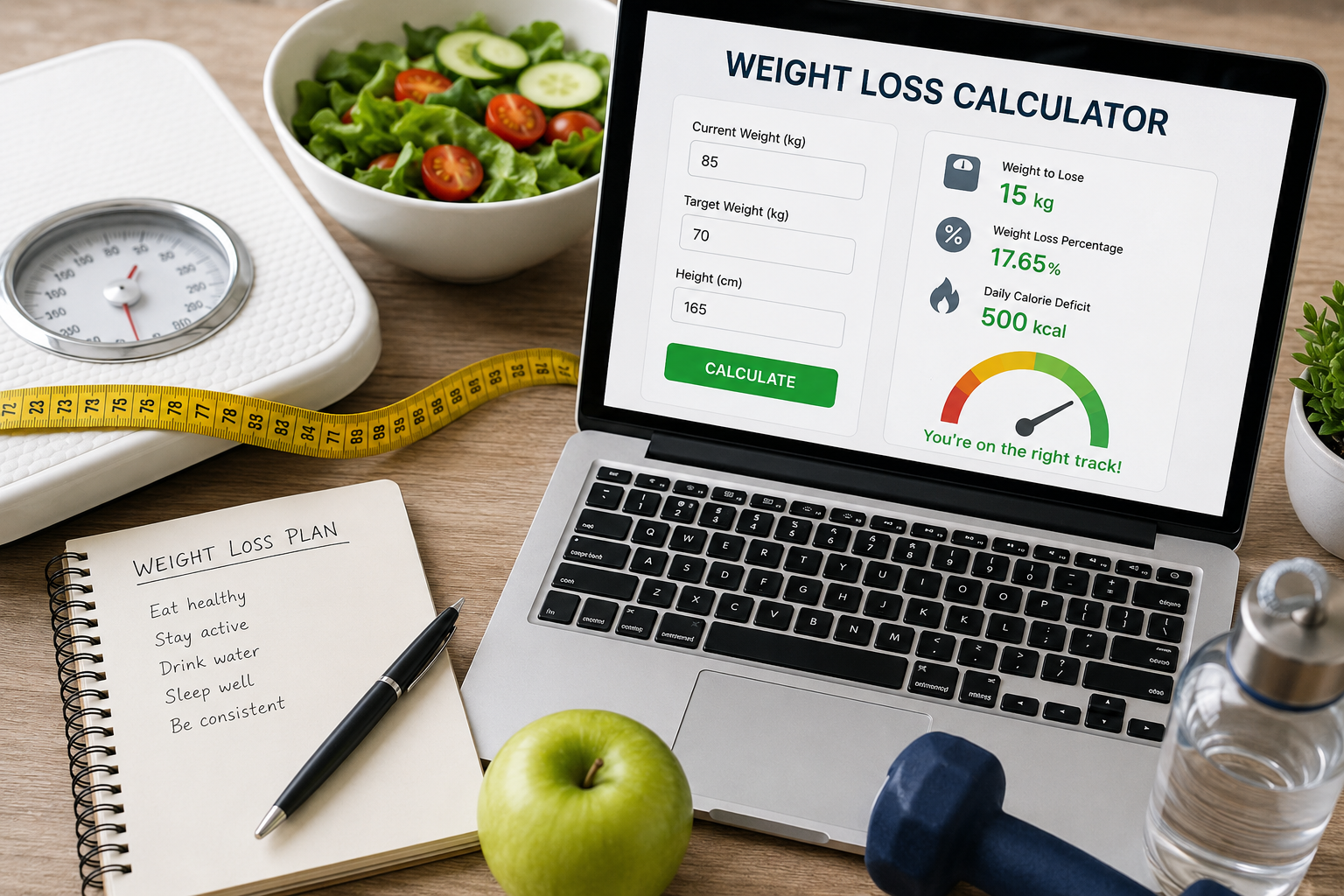
A weight loss calculator can make your health goal easier to understand. Instead of focusing only on the number on the scales, you can see how much weight you want to lose and what your target weight could look like.
Weight loss does not happen at the same speed for everyone. Your starting weight, height, age, activity level, food intake, sleep, and health can all affect your progress. For that reason, a calculator should give you an estimate rather than a promise.
This guide explains how a weight loss calculator works, how to calculate your target weight, and how to track progress in a sensible way. You will also learn why gradual changes often work better than extreme diets.
What Is a Weight Loss Calculator?
A weight loss calculator is an online tool that helps you estimate changes in body weight. Most calculators use information such as your current weight, target weight, height, and sometimes age, sex, and activity level.
The exact result depends on the calculator you use. A simple tool may only calculate the difference between your current and target weight. A more detailed tool may estimate calorie needs and suggest a daily calorie deficit.
The main purpose is to give you a starting point. It can help turn a general goal, such as “I want to lose weight,” into a clearer and measurable target.
How Does a Weight Loss Calculator Work?
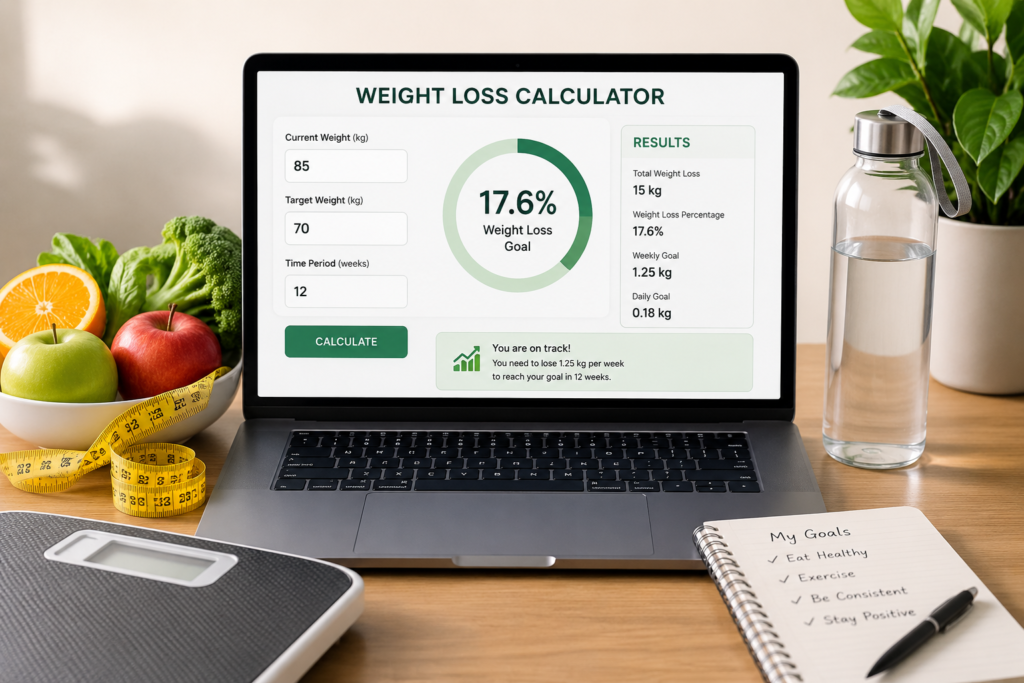
The basic calculation is simple. You subtract your target weight from your current weight.
For example, imagine your current weight is 90 kg and your target weight is 75 kg. Your planned weight loss would be 15 kg.
You can also calculate your weight loss percentage. The formula is:
Weight loss percentage = (weight lost ÷ starting weight) × 100
Using the same example, you would divide 15 kg by 90 kg and multiply the result by 100. That gives a planned weight loss of about 16.7%.
This percentage can help you understand the size of your goal. It can also make progress easier to compare over time.
How to Calculate Your Target Weight
Your target weight depends on your personal goal. A simple method starts with your current weight and the amount you want to lose.
Suppose you currently weigh 82 kg and want to lose 10 kg. Your target weight would be 72 kg.
However, choosing a target weight should involve more than simple maths. Height, body composition, age, health conditions, medication, and lifestyle can all matter.
A target that looks reasonable on paper may not suit every person. If you have a medical condition or a history of eating problems, speak with a qualified healthcare professional before making a major change to your weight.
Weight Loss Calculator and Calorie Deficit
Many weight loss calculators also estimate the calorie deficit needed for weight loss. A calorie deficit occurs when you use more energy than you consume.
Your body uses energy throughout the day for basic functions and physical activity. Food and drinks provide energy. When energy intake stays below energy use, the body can draw on stored energy.
Still, calorie calculations are estimates. Your actual energy needs can change as your body weight, activity, and routine change.
A calculator should therefore support your planning rather than control every meal you eat. A balanced diet, regular movement, and sustainable habits remain important.
How Much Weight Should You Lose?
There is no single amount that everyone should lose. Your ideal goal depends on your starting point and individual circumstances.
A useful approach is to focus on gradual progress instead of trying to lose as much weight as possible in the shortest time. Rapid changes can be difficult to maintain and may not provide the nutrition your body needs.
Your goal should also be realistic. Losing a smaller amount and keeping it off can be more useful than following an extreme plan that you cannot maintain.
If you are unsure about an appropriate target, a GP, registered dietitian, or another qualified healthcare professional can help you choose a suitable approach.
How to Use a Weight Loss Calculator
Start by entering your current weight. Use the same unit throughout the calculation, such as kilograms or pounds.
Next, enter your target weight if the calculator asks for one. Some tools may also request your height, age, sex, and activity level.
Review the result as an estimate. Do not treat it as a guaranteed prediction of future weight loss.
For better tracking, record your measurements under similar conditions. Weight can move up or down from day to day because of hydration, food, digestion, hormones, and other normal changes.
Why Your Weight Can Change During a Diet
Your body weight does not always move in a straight line. You may see the scales rise even when you are following your plan.
Water retention can cause short-term changes. A salty meal, changes in carbohydrate intake, exercise, digestion, and hormonal changes can also affect the number on the scales.
That is why one measurement does not tell the full story. Looking at a longer trend can give you a more useful picture of your progress.
You can also track other signs of change. Waist measurements, fitness, energy levels, strength, and how your clothes fit may provide useful information alongside scale weight.
Weight Loss Calculator vs BMI Calculator
A weight loss calculator and a BMI calculator answer different questions.
A weight loss calculator focuses on your current weight, target weight, and planned change. It may also estimate calorie needs or a possible timeline.
A BMI calculator uses your height and weight to calculate body mass index. BMI can provide a broad screening measure, but it does not directly measure body fat or distinguish muscle from fat.
Neither tool can provide a complete picture of your health. Use calculator results as general information rather than a diagnosis.
Common Mistakes When Setting a Weight Loss Goal
One common mistake is choosing a target that is too aggressive. A very large goal can feel overwhelming and may encourage unhealthy restrictions.
Another mistake is expecting the calculator to predict an exact date for reaching your target. Real-world weight change rarely follows a perfectly straight line.
It is also easy to focus too much on daily scale readings. Small fluctuations are normal and do not always represent changes in body fat.
Finally, avoid treating calorie numbers as absolute rules. Your needs can change, and a calculator cannot account for every factor that affects your health.
How to Track Your Weight Loss Progress
Consistency makes progress easier to understand. Weigh yourself under similar conditions if regular weighing works well for you.
Instead of reacting to every small change, look at the broader trend. You can record your weight over several weeks and compare the results.
Your habits matter too. Consider whether you are eating balanced meals, staying active, sleeping well, and following a routine that you can maintain.
If your progress stops for a while, that does not automatically mean your plan has failed. Weight loss can slow as your body weight changes. You may need to review your routine with a qualified professional.
Is a Weight Loss Calculator Accurate?
A weight loss calculator can be useful, but its results are estimates. The accuracy depends on the information you enter and the calculation method used by the tool.
No calculator can perfectly predict how your body will respond to changes in food intake or activity. Two people with similar measurements may also experience different results.
Use the calculator to understand your goal rather than expecting an exact forecast. Your real progress provides better information over time.
A Better Way to Think About Weight Loss
Healthy weight management is about more than reaching a number. Your daily habits can have a major impact on how sustainable your progress becomes.
Choose eating habits that provide enough nutrients and fit your lifestyle. Include regular physical activity that you enjoy. Give your body enough time to adapt.
Small changes can also be easier to maintain. You might improve meal quality, reduce frequent high-calorie snacks, become more active, or create a more consistent sleep routine.
The best plan is one that supports your health and fits your everyday life.
Conclusion
A weight loss calculator can help you turn a general weight goal into a clear number. It can show the difference between your current and target weight, calculate your planned weight loss percentage, and sometimes estimate calorie needs.
However, calculator results remain estimates. Your body, lifestyle, and health can affect the speed and amount of weight you lose.
Use the tool as a planning aid, track your progress over time, and focus on sustainable habits. If you need help choosing a healthy target or changing your diet, speak with a qualified healthcare professional.
FAQs
What is a weight loss calculator?
A weight loss calculator is a tool that estimates how much weight you may want to lose based on your current and target weight. Some calculators also estimate calorie needs, BMI, or a possible weight loss timeline.
How do I calculate how much weight I need to lose?
Subtract your target weight from your current weight. For example, if you weigh 85 kg and your target is 75 kg, your planned weight loss is 10 kg.
How do I calculate weight loss percentage?
Divide the amount of weight lost by your starting weight, then multiply by 100. For example, losing 8 kg from a starting weight of 80 kg equals a 10% weight loss.
Can a weight loss calculator tell me exactly how long weight loss will take?
No. A calculator can provide an estimate, but it cannot predict your exact results. Weight can change at different rates because of diet, activity, body composition, health, and other factors.
Is a calorie deficit needed for weight loss?
Weight loss generally requires your body to use more energy than it receives over time. A calorie deficit can create this energy difference, but the size and suitability of a deficit vary between people.
Can my weight increase while I am losing fat?
Yes. Short-term weight changes can happen because of water retention, food, digestion, exercise, and other factors. A longer-term trend gives a clearer view of progress.
For more updates visit: CALCIQ