

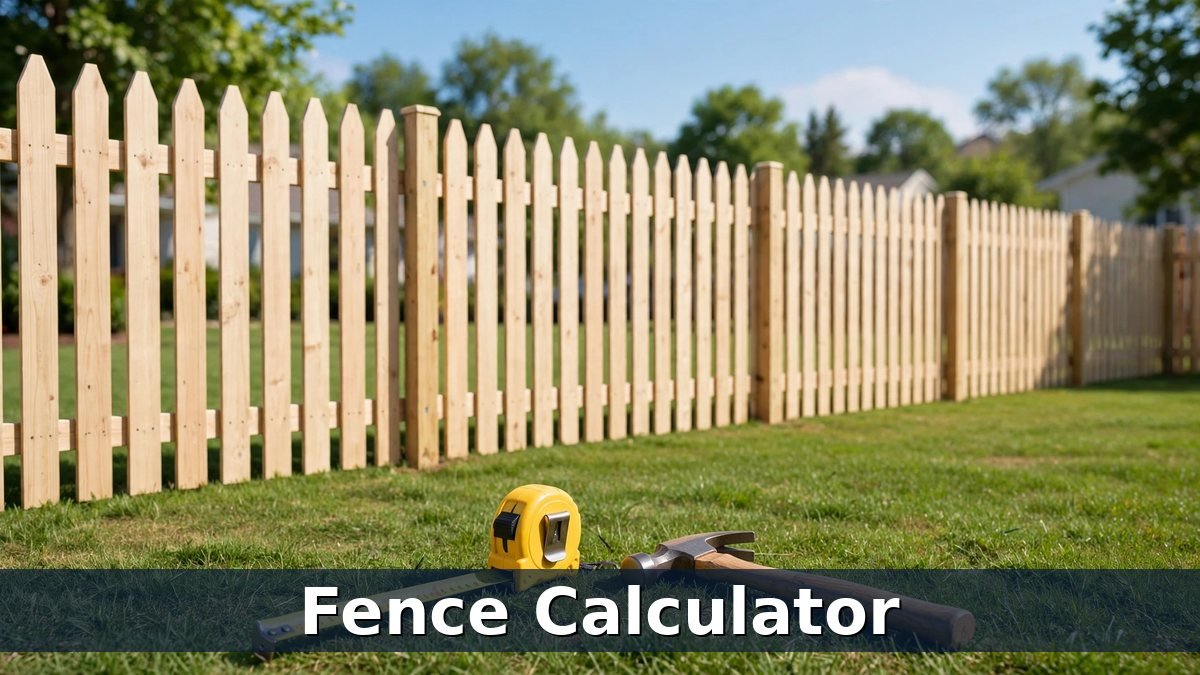
Getting a fence quote starts with numbers. The fence calculator works out exactly how many posts, rails, pickets and bags of concrete any wooden fence needs, and this guide explains how it counts them, where the numbers come from and what to allow for the inevitable offcuts.
A fence is usually the biggest single purchase homeowners make for their property, and the simplest way to keep it affordable is to work out the materials correctly before ordering. Too few posts, pickets, or bags of concrete and you are back at the yard mid-job, paying retail prices for the missing pieces. Too many, and a pile of expensive timber sits unused in the garage. Fence pricing is set by picket length and board width, so this page shows you how to work out what you need, and the fence calculator gives you the count in one step.
Fence Calculator
Estimate posts, rails, pickets and concrete for a wooden picket fence.
Table of Contents
- How to Use the Fence Calculator
- How Many Posts and Rails Do I Need?
- Worked Example: A 100-Foot Wooden Fence
- How Many Pickets Do I Need?
- Post Depth, Concrete and Digging Safely
- Tips to Cut Waste and Cost
- FAQs
How to Use the Fence Calculator
The fence calculator needs three measurements: total fence length, post spacing, and rails per section. Post spacing should be 6 to 8 feet; spacing above 8 feet risks posts leaning in wind or heavy gates, while going below 6 feet spends your budget on posts you do not need.
Rails usually run two or three per section, with posts 6 feet or taller needing three rails to stop the fence from racking. Enter the total length of the fence, not the perimeter of the yard; if only one side of the garden is being fenced, count only that side. For planning decking or a garden shed while you are here, our Board Foot Calculator converts board sizes into board feet and is useful for pricing offcuts.
Order the posts and rails after you’ve worked out how many sections your fence needs. Each section is one gap between two posts, and you add one post at the end, so the post count is always sections plus one.
How Many Posts and Rails Do I Need?
Posts are the skeleton of the fence: they carry the rails and the pickets, and they sit in the concrete. Post spacing determines how many sections you get. Dividing the total fence length by the spacing gives the number of sections; a gate is a section too, so remember to subtract the gate width from the length before you count posts.
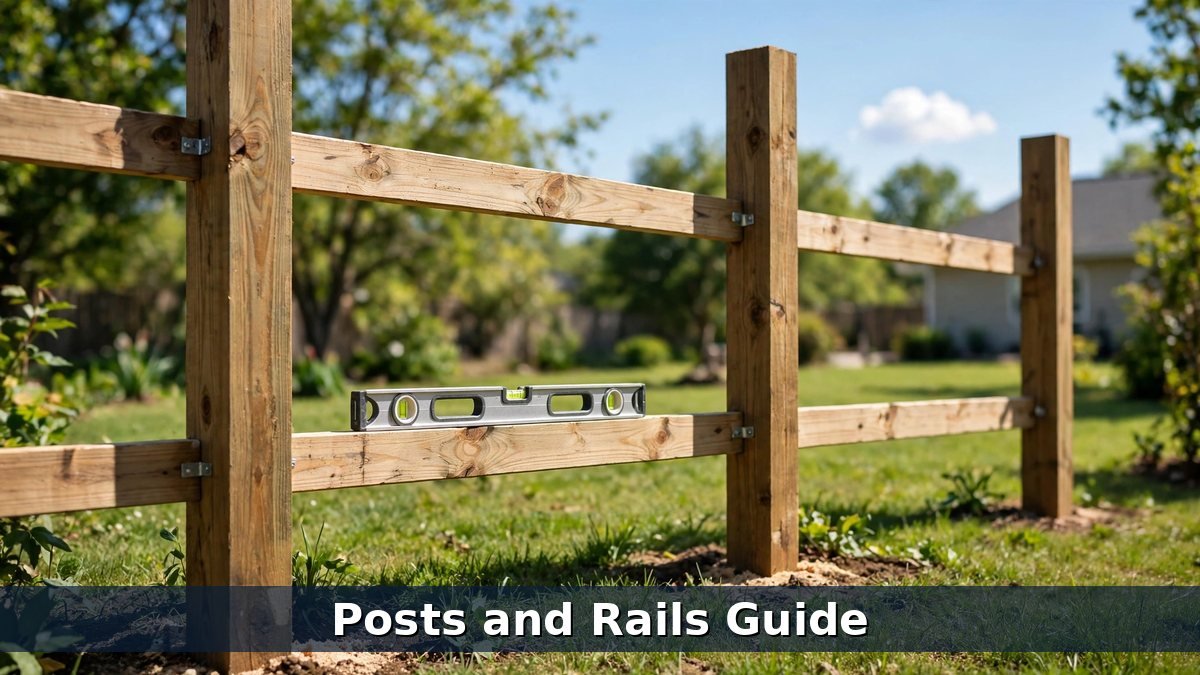
Rails are even easier to count: sections times rails per section is the number of rails. For a 100-foot fence with 8-foot spacing you need 13 sections, 26 rails at two rails per section, and 14 posts.
| Fence length | Post spacing | Sections | Posts | Rails |
|---|---|---|---|---|
| 50 ft | 8 ft | 7 | 8 | 14 |
| 100 ft | 8 ft | 13 | 14 | 26 |
| 150 ft | 8 ft | 19 | 20 | 38 |
| 100 ft | 6 ft | 17 | 18 | 34 |
| 200 ft | 8 ft | 25 | 26 | 50 |
If the ground drops or rises along the fence line, use stepped sections with level tops, keeping spacing on each side of the step at 8 feet or less. Checking Fence guides and Installation guides for post sizes can be helpful.
Worked Example: A 100-Foot Wooden Fence
Here is what the fence calculator returns for a 100-foot privacy fence with 8-foot post spacing, two rails per section and 6-inch pickets:
- Sections: Length (100) ÷ Post spacing (8) = 12.5, rounded up to 13 sections.
- Posts: Sections (13) + 1 = 14 posts.
- Rails: Sections (13) × 2 = 26 rails.
- Pickets: Fence length (100 ft) ÷ Picket width (6 in) = 200 pickets.
- Concrete: Posts (14) × 1.5 = 21 bags — this is roughly one 50 lb bag for every 1.5 posts.
That means your shopping list is 14 posts, 26 rails, 200 pickets, and 21 bags of concrete.
How Many Pickets Do I Need?
Pickets are where fence maths surprises people. Treated softwood boards sell by the foot, most often 6-inch (150 mm) wide and 6 feet long, so the basic count is simply fence length divided by the picket width, but the answer depends on the gap you leave between them.

A privacy fence is a different story: there is no gap at all, so every inch of the fence has to be covered by a picket. The picket count is simply fence length divided by the picket width, and most builders add 5% for warping, knots and the odd split board. A shadowbox fence has a picket on each side, which doubles the count.
If your local yard supplies 5.5-inch pickets instead of 6-inch, use the calculator’s picket-width option if it has one, or add 10% to the count to cover the extra boards.
| Picket width | Gap | Pickets for 100 ft |
|---|---|---|
| 6 in | Closed | 200 |
| 6 in | 1 in | 171 |
| 5.5 in | 1 in | 187 |
| 6 in | 2 in | 150 |
| 5.5 in | 2 in | 163 |
Post Depth, Concrete and Digging Safely
A fence post’s job is to stand upright and take everything the wind and the weight of the fence throws at it, so the posts need dug-in foundations and concrete. The table below shows the usual depth and concrete needed.
For most fences, posts sit one-third of their total length underground and a third of the post will be underground after it is finished. Grade the site before setting posts, or add a few extra inches of concrete for posts that will be tamped back into holes.
One concrete caution: removing soil with a spade to make way for the posts is much slower than using a post-hole digger, and you’re making a lot of holes, so you’ll appreciate the time saved. The Concrete Calculator gives the concrete by volume too, if you want to mix your own instead of buying bags: it takes the post-hole diameter, the post depth, and the number of posts.
Check for buried utilities before digging. In the UK, dial 105 for the National Grid’s electricity emergency line to report a problem, or check the local listings to see if there’s a number to call before digging.
| Post height | Dig depth | Concrete per post |
|---|---|---|
| 4 ft | 24 in | 0.5 bag |
| 5 ft | 30 in | 1.0 bag |
| 6 ft | 36 in | 1.5 bags |
If the ground is heavy clay, make the hole wider at the base, and if the soil is loose or sandy, the hole needs to be wider still. Fence posts should also be checked at least once a year to make sure none are wobbling, and you can strengthen them by adding more concrete or replacing single posts before they fail.
Tips to Cut Waste and Cost
A fence is a big purchase, and the main cost drivers are the posts, the concrete and the pickets. A picket on the box above shows how to reduce the number of pickets, but a simple rule of thumb, cutting the number of pickets by a little, can save hundreds of dollars per driveway.
- Pickets: Buy pickets in bundles of 10 and use a cut list. The calculator above gives the exact number of pickets, so you can order the right amount.
- Posts: Order treated timber that is fully pressure treated. A painted post will last longer than an unpainted one, and the extra cost is small.
- Concrete: Buying premixed bags and mixing on site is usually cheaper than buying wet concrete. Ask the supplier for the bulk price of 50 lb bags.
- Timber: Choose standard lengths. A custom order can be cut to size but you will pay for the offcuts, so pick the best value for the longest cut.
The Concrete Calculator helps with the concrete quantities, while the Wheelchair Ramp Slope Calculator does the maths if you need a ramp to get deliveries to the concrete.
FAQs
How many fence posts do I need for 100 feet?
For a 100-foot fence with 8-foot post spacing, the fence calculator returns 13 sections and 14 posts. Shortening the spacing to 6 feet raises the count to 17 sections and 18 posts.
How much concrete do I need for fence posts?
The fence calculator returns roughly 1.5 bags of concrete per post for 6-foot fences, so 14 posts need about 21 bags. For 4-foot fences use half a bag per post, and for taller fences use two bags.
How many pickets do I need for a 100-foot fence?
A 100-foot privacy fence with 6-inch-wide pickets and no gap needs 200 pickets. With a 1-inch gap, it drops to around 171 — but expect to buy 5% extra for waste and warping.
How deep should fence posts be?
One-third of the post should be underground, so a 6-foot fence needs a hole about 36 inches deep. For 5-foot posts, 30 inches is standard, and 4-foot posts work well at 24 inches.
How far apart should fence posts be?
Posts are generally spaced 6 to 8 feet apart for residential fences. Wider spacing reduces costs, but posts over 8 feet apart can sag or lean in high winds.
Can I use concrete mix straight from the bag?
Yes, you can pour dry mix into the hole and add water on top, or mix it with water first. Either way, the finished post needs a day to cure before you hang the rails.
For more updates visit: CALCIQ



Comments 2