


Table of Contents
- How to Use the Steps to Miles Calculator
- How Many Steps Are in a Mile?
- The Formula Behind the Calculator
- A Worked Example
- Steps to Miles Chart
- Steps Per Mile by Height
- How to Measure Your Own Step Length
- FAQs
Your tracker says 10,000 steps, but what does that actually mean in distance? The honest answer is that it depends on your legs. A tall walker covers more ground with every step than a shorter walker, so the same step count can differ by half a mile or more between two people. This steps to miles calculator solves that problem by estimating your personal step length from your height, the same method fitness trackers use.
Enter your steps, your height and your sex, and the steps to miles calculator returns your distance in miles and kilometers. It also shows your estimated step length, how many steps a mile takes you, a rough calorie figure and your walking time at a steady 3 mph. Below the tool, you will find the formula, a worked example and charts you can use without any tool at all.
Steps to Miles Calculator
Enter your steps and your height to convert steps into miles and kilometers, with your step length estimated the way fitness trackers do it.
How to Use the Steps to Miles Calculator
Start with your step count. You can take it from a fitness tracker, a smartwatch, a pedometer or the health app on your phone. Then enter your height in feet and inches. Finally, choose your sex, because the calculator uses a slightly different step length factor for women and men. Press the button and read your results.
The most important figure is your estimated step length, shown in inches. Every other result flows from it. If you already know your real step length from a measured walk, compare it with the estimate. A big gap usually means your natural pace is longer or shorter than average, and the section near the end of this page explains how to measure your own step length in two minutes.
Remember that trackers miscount a little. Wrist devices can add steps while you drive or cook, and phone apps miss steps when the phone sits on a desk. So treat the distance as a close estimate of your day, not a laboratory measurement. For planning walks, training goals and daily targets, a close estimate is exactly what you need.
How Many Steps Are in a Mile?
For most adults, a mile takes somewhere between 2,000 and 2,500 steps. Shorter walkers land near the top of that range and taller walkers near the bottom. The often-quoted average of about 2,200 steps per mile sits in the middle, and it is a reasonable guess for a person of average height.
Height is the main reason for the spread. Steps are powered by leg length, and leg length grows with height. Sex makes a much smaller difference at the same height, only about 10 to 15 steps per mile. Pace matters too. Your steps lengthen when you walk briskly and shorten when you stroll, climb a hill or carry shopping. Running lengthens them a lot, which is why running a mile takes far fewer steps than walking it.
This is why a single fixed conversion, such as 2,000 steps per mile, misleads almost everyone a little. The steps to miles calculator uses your height instead, so your conversion reflects your body rather than a population average. Step-count specialists such as StepsToMilesConverter use the same height-based method for the same reason.
The Formula Behind the Calculator
The conversion has two steps. First, estimate step length from height. Research on one-mile step counts by Hoeger and colleagues, published in the American College of Sports Medicine’s Health and Fitness Journal in 2008, produced the factors trackers still use today: step length is about 0.413 times height for women and 0.415 times height for men.
Second, turn steps into distance. A mile is 5,280 feet, or 63,360 inches. So the full formula is:
- Step length (inches) = height (inches) × 0.413 for women, or × 0.415 for men
- Distance (miles) = steps × step length (inches) ÷ 63,360
- Distance (kilometers) = miles × 1.609344
- Steps per mile = 63,360 ÷ step length (inches)
One point of confusion deserves clearing up. A step is the distance from one footfall to the next, left to right. A stride is two steps, from one foot back to the same foot. Trackers count steps, so this steps to miles calculator works in step length, not stride length. If a source gives you a stride figure, halve it before comparing.
A Worked Example
Take a woman who is 5 feet 4 inches tall and walks 10,000 steps. Here is how the steps to miles calculator works through it:
- Height = 5 × 12 + 4 = 64 inches
- Step length = 64 × 0.413 = 26.4 inches
- Distance = 10,000 × 26.4 ÷ 63,360 = 4.17 miles
- In kilometers = 4.17 × 1.609344 = 6.71 km
- Steps per mile = 63,360 ÷ 26.4 = 2,397 steps
- Calories ≈ 10,000 × 0.04 = about 400
- Walking time at 3 mph ≈ 83 minutes
Now compare a man of 5 feet 9 inches with the same 10,000 steps. His step length is 28.6 inches, so he covers 4.52 miles, or 7.27 km, and a mile takes him 2,213 steps. Same steps, same effort, noticeably different distance. That gap is the whole reason height belongs in the conversion.

Steps to Miles Chart
The chart below uses the worked example’s walker, a woman of 5 feet 4 inches with a 26.4 inch step. It is handy for quick checks. If you are taller or shorter, your figures will be a little higher or lower, so use the steps to miles calculator for your own numbers.
| Steps | Miles | Kilometers |
|---|---|---|
| 1,000 | 0.42 | 0.67 |
| 2,000 | 0.83 | 1.34 |
| 5,000 | 2.09 | 3.36 |
| 7,500 | 3.13 | 5.04 |
| 10,000 | 4.17 | 6.71 |
| 15,000 | 6.26 | 10.07 |
| 20,000 | 8.34 | 13.43 |
The pattern is easy to remember once you see it. Every 1,000 steps adds about 0.42 miles for this walker. So a 3,000 step school run is roughly 1.25 miles, and a 12,000 step day is a little over 5 miles. If steps are part of a wider fitness plan, our weight loss calculator and body fat percentage calculator sit in the same Fitness section and pair well with these figures.
Steps Per Mile by Height
This second chart shows why height changes everything. Each row gives the estimated step length and the steps needed to walk one mile at that height.
| Height | Step length | Steps per mile |
|---|---|---|
| Woman, 5 ft 0 in | 24.8 in | 2,557 |
| Woman, 5 ft 4 in | 26.4 in | 2,397 |
| Woman, 5 ft 8 in | 28.1 in | 2,256 |
| Man, 5 ft 6 in | 27.4 in | 2,313 |
| Man, 5 ft 9 in | 28.6 in | 2,213 |
| Man, 6 ft 0 in | 29.9 in | 2,120 |
| Man, 6 ft 2 in | 30.7 in | 2,063 |
A mile can differ by almost 500 steps between the shortest and tallest walkers in the table. That also means two friends walking side by side will record different step counts over the same route, and both trackers can be right. For drivers planning the same journey by road, our mileage calculator covers the distance side from the car’s point of view.
How to Measure Your Own Step Length
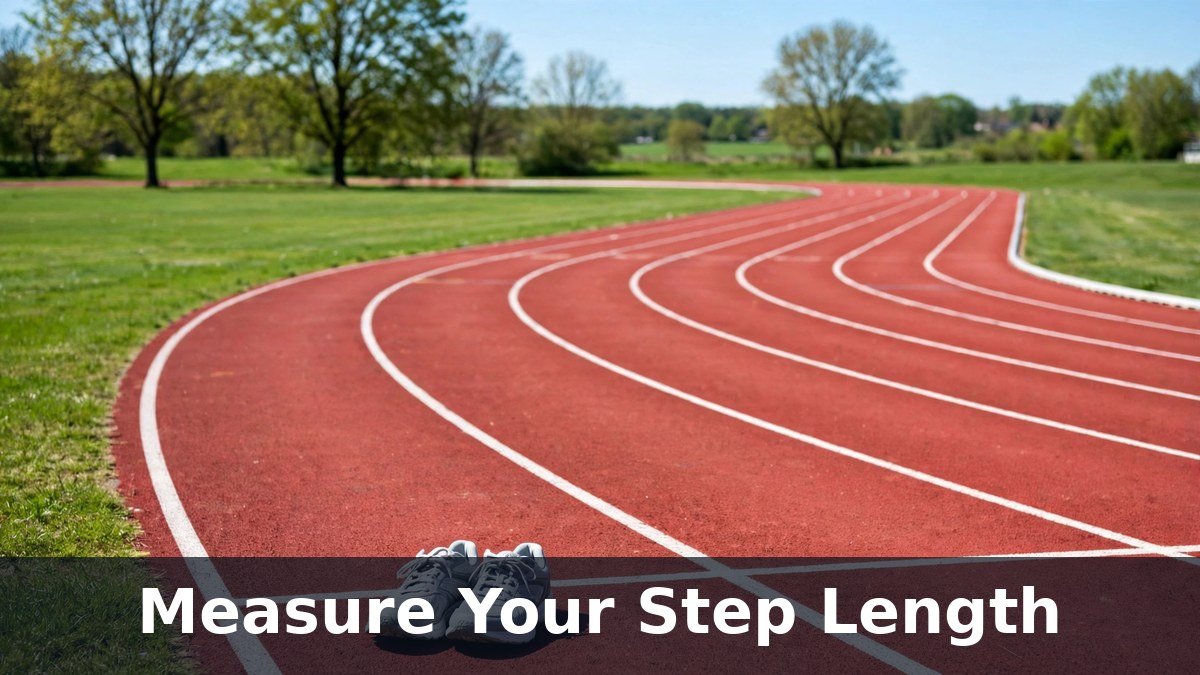
The height formula is a population average, and your own gait may differ. Measuring beats estimating, and it takes about two minutes. Walk 20 normal steps along a flat pavement or sports field at your usual pace, then measure the total distance from your first heel mark to the last. Divide the distance by 20 to get your step length.
Alternatively, walk a distance you already know, such as a 100 metre stretch or one lap of a standard 400 metre track, and count your steps. Divide the distance by the count. Calculator sites that include calories, such as CalcOpenly’s steps and distance calculator, use the same measured-step approach alongside the height formula. Once you know your real step length, you can sanity-check any tracker figure: your daily distance is simply your steps multiplied by your step length.
Repeat the measurement at different paces if you walk for exercise. Brisk walking can add two or three inches to a step, which over 10,000 steps adds up to a third of a mile. Hills, sand and snow shorten steps again.
FAQs
How many miles is 10,000 steps?
For most adults, 10,000 steps is between about 4 and 4.7 miles. A woman of 5 feet 4 inches covers 4.17 miles, while a man of 5 feet 9 inches covers 4.52 miles. Enter your own height into the steps to miles calculator for your personal figure.
How many steps are there in a mile?
Most adults take between 2,000 and 2,500 steps per mile. Height decides where you land in that range: a woman of 5 feet takes about 2,557 steps per mile, and a man of 6 feet 2 inches takes about 2,063. The commonly quoted average of roughly 2,200 steps suits people of average height.
Where does the 10,000 steps a day idea come from?
The 10,000 step target began as a marketing slogan for a Japanese pedometer sold in the 1960s, and the round number stuck. Research since then shows that health benefits grow steadily with daily steps and level off at different points for different ages. It remains a memorable, motivating target, even if it is not a magic threshold.
How accurate is the height-based estimate?
It is a good estimate for ordinary walking on level ground, usually within a few percent of your measured distance. Your real step length changes with pace, hills, footwear and fatigue, so a measured step length is better when the number really matters. This steps to miles calculator is built for planning and motivation, where a close estimate is enough.
How many calories do 10,000 steps burn?
A rough average is about 400 calories for 10,000 steps, based on around 40 calories per 1,000 steps for a typical adult. Heavier walkers and faster paces burn more, and lighter walkers burn less. Treat the figure as a guide for planning rather than an exact count.
What is the difference between a step and a stride?
A step is one footfall to the next, from your left foot to your right foot. A stride is two steps, ending back on the same foot, so a stride is about twice as long as a step. Pedometers and trackers count steps, which is why step length, not stride length, is the figure used in this conversion.
For more updates visit: CALCIQ