

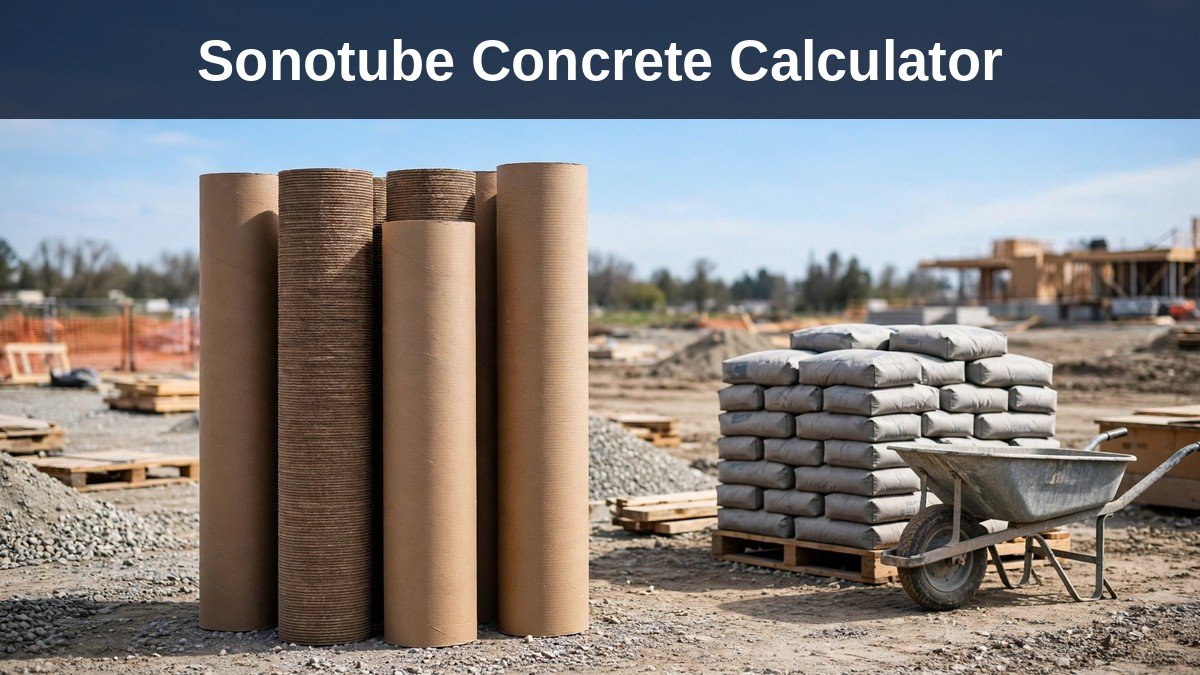
Running short of concrete mid-pour is frustrating and expensive. Therefore, a sonotube concrete calculator helps you work out the exact volume before you buy anything. Moreover, it converts that volume into whole bags, so your shopping list is ready in minutes.
Table of Contents
- What Is a Sonotube and When Do You Use One?
- How a Sonotube Concrete Calculator Works
- Sonotube Concrete Calculator Chart Per Foot of Depth
- Bag Sizes and Yields for This Concrete Tube Calculator
- Worked Example: A 12-Inch Tube, 4 Feet Deep
- How Deep Should a Sonotube Go?
- Tips to Avoid Running Short on Pour Day
- FAQs
What Is a Sonotube and When Do You Use One?
A Sonotube is a round cardboard form for concrete. First, you place it in a dug hole or above ground. Next, you fill it with wet concrete. Finally, you peel the cardboard away once the concrete has cured.
Sonotube is actually a brand name from Sonoco. However, builders now use the word for almost any round tube form. Similarly, other brands make near-identical cardboard forms. Therefore, this guide works for any round form you buy.
Moreover, these tubes suit many small building jobs. For example, they form deck footings, fence posts, and porch piers. In addition, they work well for sign bases and light poles. Consequently, they appear on most residential building sites.
Above all, a tube gives you a neat, round column. First, the smooth wall shapes the concrete cleanly. Meanwhile, the round shape spreads load evenly into the soil. As a result, inspectors and engineers accept tubes widely. Therefore, running a sonotube concrete calculator before you dig saves a return trip later. For larger flat pours, however, use our general concrete calculator instead.
How a Sonotube Concrete Calculator Works
A sonotube concrete calculator treats each tube as a cylinder. Therefore, it uses the standard cylinder volume formula. That formula is volume equals π × radius² × depth. In other words, you multiply pi by the squared radius, then by the depth.
First, however, you must use matching units. For example, convert the diameter from inches to feet first. Next, halve the diameter to get the radius. Then, square that radius in feet. Finally, multiply by pi and by the depth in feet.
Moreover, the result comes out in cubic feet. Consequently, you can divide it by 27 for cubic yards. Alternatively, you can divide it by a bag yield for bag counts. Indeed, that second step is what most buyers actually need.
Similarly, a concrete tube calculator always rounds bags up. For instance, 5.2 bags becomes 6 whole bags. After all, stores do not sell part bags. Therefore, rounding up protects you from a short pour. If you need to convert units first, our CFT calculator handles cubic feet conversions quickly.

Sonotube Concrete Calculator Chart Per Foot of Depth
This sonotube concrete calculator chart shows volume per foot. First, find your tube diameter in the left column. Next, read across for the volume in cubic feet. Finally, check the 80-lb bag count for that foot.
However, remember one important detail about bags. The per-foot bag count is rounded up on its own. Therefore, do not multiply that rounded figure by your depth. Instead, multiply the volume first, then round up once. As a result, you will avoid buying far too many bags.
For example, a 12-inch tube needs 0.79 cubic feet per foot. Over 4 feet, that gives 3.14 cubic feet in total. Consequently, the worked example below uses exactly those figures.
| Tube diameter | Volume per 1 ft of depth | 80-lb bags per foot (rounded up) |
|---|---|---|
| 8 in | 0.35 ft³ | 1 |
| 10 in | 0.55 ft³ | 1 |
| 12 in | 0.79 ft³ | 2 |
| 16 in | 1.40 ft³ | 3 |
| 18 in | 1.77 ft³ | 3 |
| 24 in | 3.14 ft³ | 6 |
Moreover, notice how quickly volume grows with diameter. For instance, doubling the diameter roughly quadruples the volume. Therefore, wide tubes need surprisingly large amounts of concrete.
Bag Sizes and Yields for This Concrete Tube Calculator
Bagged concrete is sold by weight, not by volume. However, each bag size yields a known finished volume. Therefore, this concrete tube calculator uses the manufacturers’ published yields. According to the QUIKRETE Concrete Mix data sheet, those yields are consistent across standard mixes.
First, an 80-lb bag yields 0.60 cubic feet. Next, a 60-lb bag yields 0.45 cubic feet. Finally, a 40-lb bag yields just 0.30 cubic feet. Consequently, bigger bags cover more volume per trip.
| Bag size | Yield per bag | Bags per cubic yard (27 ft³) |
|---|---|---|
| 80 lb | 0.60 ft³ | 45 |
| 60 lb | 0.45 ft³ | 60 |
| 40 lb | 0.30 ft³ | 90 |
Moreover, bag choice affects your workload, not just cost. For example, 80-lb bags are heavy to lift and mix. By contrast, 40-lb bags are easier to handle alone. Therefore, many solo builders choose smaller bags deliberately. Meanwhile, larger crews usually prefer 80-lb bags for speed. In addition, the independent Omni Calculator Sonotube calculator uses this same cylinder method and bag logic. Therefore, its results should closely match the figures in this guide.
Worked Example: A 12-Inch Tube, 4 Feet Deep
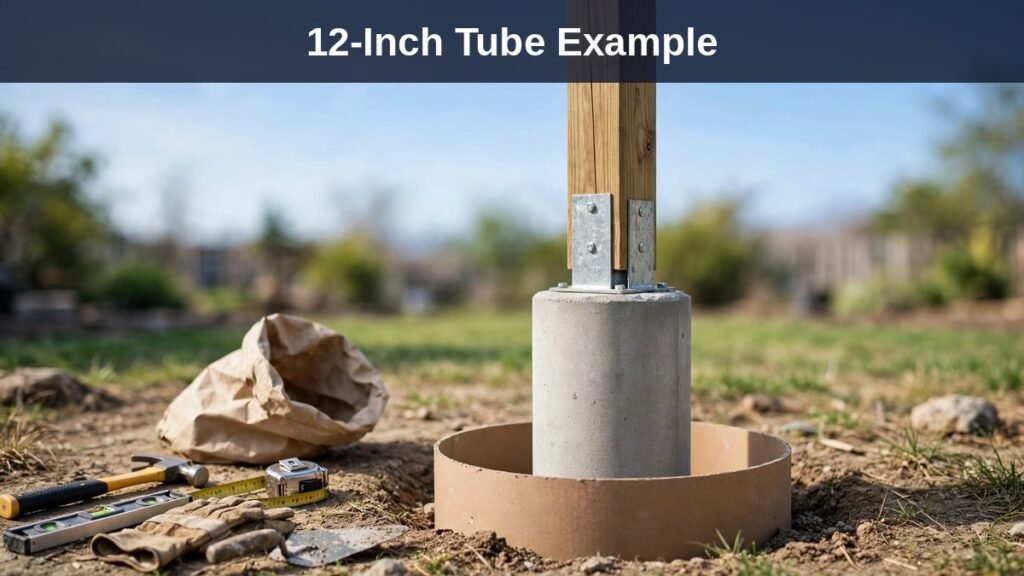
Now, let us work through a common deck footing with this sonotube concrete calculator example. Suppose you have one 12-inch tube, set 4 feet deep. First, convert the diameter into a radius in feet. Half of 12 inches is 6 inches, which is 0.5 feet.
Next, apply the cylinder formula step by step. Volume equals π × 0.5² × 4. That is 3.1416 × 0.25 × 4, which equals 3.14 cubic feet. Therefore, one tube holds 3.14 cubic feet of concrete.
Then, convert that volume into 80-lb bags. Divide 3.14 by the 0.60 yield per bag. As a result, you get 5.24 bags, usually written as 5.2 bags. Consequently, you must round up and buy 6 bags.
| Step | Calculation | Result |
|---|---|---|
| Radius | 12 in ÷ 2 = 6 in = 0.5 ft | 0.5 ft |
| Volume | π × 0.5² × 4 ft | 3.14 ft³ |
| Bags (exact) | 3.14 ÷ 0.60 | 5.24 bags |
| Bags to buy | Round 5.24 up | 6 × 80-lb bags |
Finally, add a small safety margin before you shop. For instance, four tubes at this size need 24 bags exactly. However, adding 10% takes the order to 27 bags. Therefore, a few spare bags cover spills and over-digging.
How Deep Should a Sonotube Go?
Depth matters as much as diameter for footings. First, the base of the tube must sit below the frost line. Otherwise, frozen soil can lift the footing in winter. As a result, the concrete can crack or tilt over time.
However, frost line depth varies greatly by location. For example, southern areas may need only 12 inches. By contrast, northern areas may need 42 inches or more. Therefore, always check your local building code first. Moreover, your permit office can confirm the exact figure.
In addition, depth includes any part above ground. For instance, a tube may rise 6 inches above grade. Consequently, that raised section also needs concrete. Therefore, measure the full concrete height, not just the hole.
Similarly, the hole itself should sit on firm soil. First, dig past loose topsoil and organic material. Next, compact the base if the soil feels soft. Finally, keep the tube plumb and braced before pouring. As a result, the finished post stays straight and strong.
Tips to Avoid Running Short on Pour Day
Good planning makes pour day much calmer. First, remeasure every hole, then run the sonotube concrete calculator again before you order bags. However, holes often end up wider than planned. Therefore, your real volume may exceed the neat calculation. Moreover, spilled and leftover mix in the wheelbarrow adds waste.
Consequently, most builders add 5 to 10% extra concrete. For example, that margin covers uneven hole walls easily. In addition, unopened spare bags can usually be returned. Therefore, buying extra carries very little real risk. By contrast, running short mid-pour creates a weak joint.
Next, think carefully about mixing capacity and timing. For instance, one person can mix only so fast. Meanwhile, concrete starts setting once water is added. As a result, large tubes may need several helpers. Finally, keep bags dry and close to the hole.
Similarly, consider ready-mix delivery for very large jobs. For example, dozens of bags quickly become hard labour. Therefore, compare bag costs against a small truck load. Above all, plan first, and the pour itself stays simple.
FAQs
How many bags of concrete do I need for a 12-inch Sonotube 4 feet deep?
You need 6 bags of 80-lb concrete mix. First, the tube holds 3.14 cubic feet of concrete. Then, dividing by 0.60 gives 5.24 bags, which rounds up to 6. Moreover, adding one spare bag is a sensible safety step.
How do I calculate concrete for a Sonotube?
Use the cylinder formula, π × radius² × depth. First, convert the radius and depth into feet. Next, multiply to get the volume in cubic feet. Finally, divide by your bag yield and round up.
How much concrete is in an 8-inch Sonotube per foot?
An 8-inch tube holds about 0.35 cubic feet per foot. Therefore, one foot of depth needs one 80-lb bag after rounding up. However, for deeper tubes, multiply the volume first. Then round up once at the end.
Should I add extra concrete to my Sonotube order?
Yes, add 5 to 10% extra to your total. For example, this covers spills, uneven holes, and mixing losses. Moreover, most stores accept returns of unopened bags. Therefore, a small extra order is low-risk insurance.
How deep should a Sonotube footing be?
The base should sit below your local frost line. However, that depth varies widely, from about 12 to over 42 inches. Therefore, check your local building code before digging. In addition, allow for any tube showing above ground.
Can I use 60-lb or 40-lb bags instead of 80-lb bags?
Yes, but you will need more of them. For instance, a 60-lb bag yields 0.45 cubic feet, and a 40-lb bag yields 0.30. Therefore, the same 3.14 cubic feet needs 7 bags at 60 lb. Alternatively, it needs 11 bags at 40 lb.
For more updates visit: CALCIQ



Comments 2