

Table of Contents
- How to Use the Sand Calculator
- How Much Sand Do I Need?
- A Worked Example
- Sand Weight: Dry Sand vs Wet Sand
- How Much Area Does One Cubic Yard Cover?
- Sand for Common Projects
- Tips for Ordering Sand
- FAQs
Sand looks simple, but ordering the wrong amount is surprisingly common. One yard too little means a second delivery fee, while one yard too much leaves a heavy pile sitting on your driveway for weeks. This sand calculator removes the guesswork. You enter the size of the area and the depth you want, and the tool works out the volume, the weight and the number of bags for you.
The sand calculator handles rectangular and round areas. It also lets you choose between dry sand and wet sand, because the two weigh very different amounts. As a result, the tonnage you order matches the sand you actually receive. Below the tool, you will find the formula, a full worked example, weight and coverage tables, and answers to the questions people ask most often.
Sand Calculator
Enter the size of the area and how deep the sand should be to see the volume, weight and number of bags to order.
How to Use the Sand Calculator
Using the sand calculator takes less than a minute. First, choose your area shape, either rectangle or circle. Next, enter the length and width in feet. For a round area, enter the diameter as the length and leave the width as it is, because the tool only uses the diameter. Then enter the sand depth in inches. Finally, pick your sand type and press the button.
The results appear straight away. You will see the volume in cubic feet and cubic yards, the total weight in pounds and tons, and the number of 50 lb bags you would need. Most bulk suppliers sell sand by the ton or by the cubic yard, while hardware stores sell it by the bag. Therefore, having all three figures in front of you makes comparing prices much easier.
Measure carefully before you start. For an irregular area, split it into smaller rectangles and circles, work out each part separately, and then add the results together. Also, measure the longest and widest points of a curved area. A small measuring error grows quickly once depth is added, so a careful measurement saves money later.
How Much Sand Do I Need?
Every sand calculation follows the same three steps. First, work out the surface area. For a rectangle, multiply the length by the width. For a circle, multiply pi by the radius squared. Second, multiply the area by the depth to get the volume. Third, convert that volume into the unit your supplier uses.
The formulas look like this:
- Rectangle volume = length × width × depth
- Circle volume = 3.14159 × (diameter ÷ 2)² × depth
- Cubic yards = cubic feet ÷ 27
- Weight in pounds = cubic feet × density per cubic foot
- Tons = pounds ÷ 2,000
- 50 lb bags = total pounds ÷ 50, rounded up
Depth needs care, because it is usually measured in inches while the area is in feet. So divide the depth in inches by 12 before you multiply. For example, 6 inches of depth is 0.5 feet. The sand calculator does this conversion for you, which removes the most common source of mistakes.
Density matters just as much as volume. Sand is not a fixed weight, because moisture and packing change how much a cubic foot weighs. The Engineering ToolBox publishes 97 lb per cubic foot for dry sand and 119 lb per cubic foot for wet sand, and this sand calculator uses those published figures. Bagged sand from a store follows a handy rule of thumb, since a standard 50 lb bag holds about half a cubic foot.
A Worked Example
Imagine you are filling a square area of 10 feet by 10 feet with sand, 6 inches deep, and the sand is dry. Here is what the sand calculator gives you, step by step:
- Area = 10 × 10 = 100 square feet
- Volume = 100 × 0.5 = 50 cubic feet
- Cubic yards = 50 ÷ 27 = 1.85 cubic yards
- Weight = 50 × 97 = 4,850 lb
- Tons = 4,850 ÷ 2,000 = 2.42 tons
- Bags = 4,850 ÷ 50 = 97 bags of 50 lb
So you would order about 2.5 tons in bulk, or 97 bags. Now compare the same area with wet sand. The volume stays 50 cubic feet, but the weight climbs to 5,950 lb, which is 2.98 tons and 119 bags. That difference surprises many people. It also explains why a load that looked right on paper can strain a small trailer.
Round areas work the same way. A round sandbox of 8 feet across with sand 12 inches deep needs 64 cubic feet, which is 2.37 cubic yards. In dry sand that weighs 6,208 lb, or about 3.1 tons. If you prefer bags, you would need 125 of the 50 lb size. Examples like this show why the depth you choose changes the order so much.
Sand Weight: Dry Sand vs Wet Sand
Weight is where most sand orders go wrong, because two loads with the same volume can differ by hundreds of pounds. Rain alone can push a pile from dry to wet in a single day. The table below uses the Engineering ToolBox density figures that this sand calculator is built on.
| Sand type | Density (lb per cubic foot) | Weight per cubic yard | Tons per cubic yard |
|---|---|---|---|
| Dry sand | 97 | 2,619 lb | 1.31 tons |
| Wet sand | 119 | 3,213 lb | 1.61 tons |
As the table shows, one cubic yard of wet sand weighs about 594 lb more than the same yard of dry sand. Consequently, weight limits matter when you collect sand yourself. A typical half-ton pickup can legally carry far less than a full cubic yard of wet sand, so two smaller trips are often safer than one overloaded trip.
Sand type also affects the job itself. Play sand is washed and screened, so it suits sandboxes and play areas. Mason sand has a fine, even texture for mortar and for leveling under pavers. Coarse concrete sand drains better, which makes it a good base material. The sand calculator works for all of them, although very coarse or very fine products may sit slightly above or below the published densities.
How Much Area Does One Cubic Yard Cover?
Coverage questions work in reverse. Instead of asking how much sand an area needs, you ask how far one cubic yard will go. One cubic yard is 27 cubic feet, so the coverage depends only on depth. The table below gives the standard figures.
| Sand depth | Area one cubic yard covers |
|---|---|
| 1 inch | 324 sq ft |
| 2 inches | 162 sq ft |
| 3 inches | 108 sq ft |
| 4 inches | 81 sq ft |
| 6 inches | 54 sq ft |
| 12 inches | 27 sq ft |
These numbers help with quick planning. For instance, a 200 square foot patio base at 2 inches deep needs a little more than one cubic yard of sand. However, the sand calculator is still the safer choice for a final order, because it combines your exact area, depth and sand type in one step.
Remember that sand settles. A freshly spread layer compacts underfoot and after rain, so the finished level ends up lower than the loose level you spread. For that reason, many installers add a small extra allowance, which the next sections explain.
Sand for Common Projects
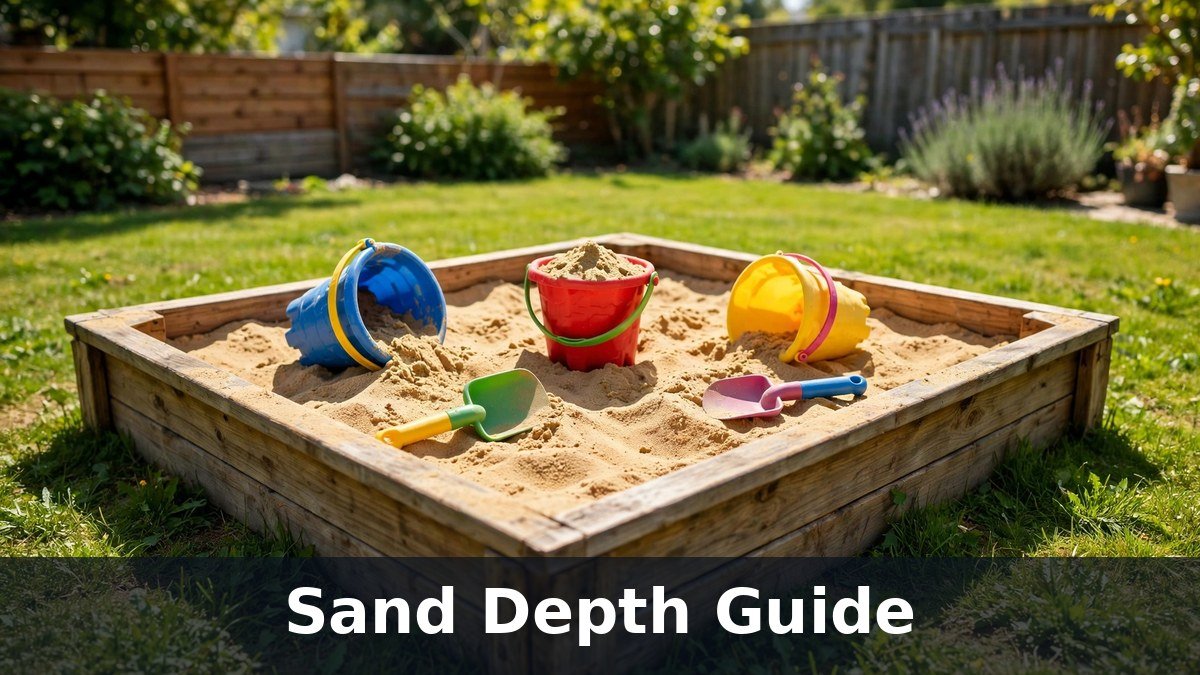
Different projects call for different depths, and depth drives the whole calculation. A sandbox usually needs 6 to 12 inches of play sand, deep enough for digging but not so deep that it spills everywhere. Under a pool, a level sand base of about 2 inches cushions the liner and smooths small bumps in the ground. For a paver patio, a bedding layer of roughly 1 inch of coarse sand sits over a compacted gravel base, and extra sand gets swept into the joints afterwards.
Bocce courts, volleyball courts and horseshoe pits each need their own depths, often 3 to 6 inches over the playing area. Gardeners also use sand to improve drainage in heavy soil and to level low spots in a lawn, although thin layers are best there. Whatever the project, enter its real dimensions into the sand calculator rather than a rough guess. A project that looks small can still pass a ton of sand very quickly.
If you are topping up an area that already has sand, measure the current depth first. Then subtract it from your target depth and enter only the difference. This simple step stops you from ordering a full load when a half load would do. It works for sandboxes, play areas and animal runs alike.

Tips for Ordering Sand
A few habits make ordering smoother. First, round up slightly rather than down. Most suppliers and installers suggest adding 5 to 10 percent for settling, spillage and uneven ground. Running short costs more, because a second delivery usually carries a second fee.
Second, decide between bulk and bags with real numbers. Bags suit small jobs and tight access, but they cost much more per ton and create a lot of plastic waste. Bulk delivery suits anything over about half a ton, provided a truck can reach your driveway or yard. The sand calculator shows both figures, so you can compare them directly.
Third, prepare the spot before delivery. Clear the area, lay a tarp where the pile will sit, and check the weather. A tarp keeps sand off your soil and makes cleanup easier, while dry weather keeps the weight closer to the dry figures in the table above. Finally, confirm the sand type when you order, because play sand, mason sand and concrete sand are not interchangeable on every project.
FAQs
How much sand do I need for a 10 × 10 area?
It depends on depth and moisture. At 6 inches deep, a 10 × 10 foot area needs 50 cubic feet of sand, which is 1.85 cubic yards. In dry sand that is 4,850 lb, or 2.42 tons. Enter your own depth in the sand calculator for an exact figure.
How much does a cubic yard of sand weigh?
A cubic yard of dry sand weighs about 2,619 lb, which is 1.31 tons. A cubic yard of wet sand weighs about 3,213 lb, or 1.61 tons. These figures come from the Engineering ToolBox densities of 97 and 119 lb per cubic foot.
How many 50 lb bags of sand are in a cubic yard?
One cubic yard of dry sand weighs 2,619 lb, so it equals about 53 bags of 50 lb. You can also think in volume, since each 50 lb bag holds roughly half a cubic foot and a cubic yard holds 27 cubic feet.
How deep should sand be in a sandbox?
Most sandboxes work well with 6 to 12 inches of play sand. Six inches is enough for digging and moulding, while 12 inches suits larger boxes and older children. Measure the box, then run the numbers through the sand calculator before you buy.
Is it cheaper to buy sand in bulk or in bags?
Bulk is almost always cheaper per ton once you need more than about half a ton. Bags cost more, but they are cleaner to move and store for small jobs. Compare both with the weights from this sand calculator, because delivery fees change the picture on medium jobs.
Should I add extra sand to my order?
Yes, a small allowance is sensible. Add about 5 to 10 percent for settling, spillage and uneven ground. Sand compacts after spreading and rain, so the extra keeps your finished level where you planned it.
For more updates visit: CALCIQ



Comments 2