


Table of Contents
- How to Use the Pool Volume Calculator
- Why Pool Volume Matters
- Pool Volume Formulas by Shape
- How to Find the Average Depth
- A Worked Example
- Common Pool Sizes and Their Volumes
- Common Mistakes When Measuring a Pool
- FAQs
Almost every pool decision starts with one number: how much water the pool holds. Chemical doses are sold per 10,000 gallons, heaters and pumps are sized by volume, and salt systems need the gallon count before they can work properly. Guessing that number leads to cloudy water, wasted chemicals and equipment that runs too hard or too little. This pool volume calculator works it out from a few simple measurements.
The pool volume calculator covers the four shapes that make up nearly every backyard pool: rectangle, round, oval and kidney. You enter the dimensions and the shallow and deep end depths, and the tool returns the volume in US gallons, liters and cubic feet. Below the tool you will find the formulas for each shape, a worked example and a table of common pool sizes, so you can check your result in seconds.
Pool Volume Calculator
Enter your pool shape and measurements to see how many gallons of water it holds.
How to Use the Pool Volume Calculator
Start by choosing your pool shape. Then measure the length and width of the water surface in feet, not the deck or the coping around the edge. For a round pool, enter the diameter as the length. Kidney pools ask for one extra figure, the second width, which you measure at the narrower end of the pool.
Next, enter the shallow end depth and the deep end depth. Measure the water depth itself, not the height of the pool wall, because the waterline usually sits a few inches below the top. The pool volume calculator averages the two depths for you, which is how pool professionals handle a sloped floor. Press the button and read the gallons figure first. That is the number you need for chemical dosing, and it is the figure your pool shop will ask for.
If your pool has an unusual shape, split it into simpler sections. Work out each section as its own shape, then add the volumes together. A pool with an attached round spa, for example, is just a rectangle plus a circle. The same trick works for L-shaped pools.
Why Pool Volume Matters
Chemical labels dose by volume. A chlorine or shock treatment typically tells you how much product to add per 10,000 gallons, so a pool you believe holds 15,000 gallons but actually holds 19,000 will be under-dosed by more than a fifth. Under-dosing lets algae take hold. Over-dosing, from guessing too high, can irritate eyes and skin and fade a liner.
Equipment sizing depends on volume too. A pump and filter need to turn over the whole pool in a set number of hours, and a heater rated for a small pool will struggle with a large one. Salt chlorine generators are sold by the maximum gallons they can treat. Even your water bill cares about the answer, because filling a pool takes the full volume in one go. Our surface area calculator is a handy companion here, since covers and liners are ordered by surface area rather than volume.
Guides from pool supply specialists such as ePoolSupply’s pool volume guide make the same point: measure carefully once, and every chemical and equipment decision after that becomes easier and cheaper.
Pool Volume Formulas by Shape
Every formula in the table below follows the same logic. First you find the volume in cubic feet, using the surface area and the average depth. Then you convert cubic feet to gallons. One cubic foot of water holds 7.48052 US gallons, the standard NIST conversion. The pool industry often rounds that figure to 7.5 for quick estimates, which is close enough for a rough check but slightly overstates the volume. This pool volume calculator uses the exact 7.48052 figure.
| Pool shape | Formula for gallons |
|---|---|
| Rectangle | length × width × average depth × 7.48052 |
| Round | 3.14159 × radius × radius × average depth × 7.48052 |
| Oval | 3.14159 × (length ÷ 2) × (width ÷ 2) × average depth × 7.48052 |
| Kidney | (width 1 + width 2) × length × 0.45 × average depth × 7.48052 |
The kidney formula uses a 0.45 shape factor, which accounts for the way a kidney pool curves in at the middle. It is an approximation, so kidney results are the least exact of the four. For chemical dosing, that small margin rarely matters, but for a heater purchase you may want to confirm with the pool builder’s original figures if you have them.
To convert the result to liters, multiply gallons by 3.78541. The pool volume calculator shows liters automatically. That is helpful for owners with metric chemical labels or pools built outside the United States.
How to Find the Average Depth
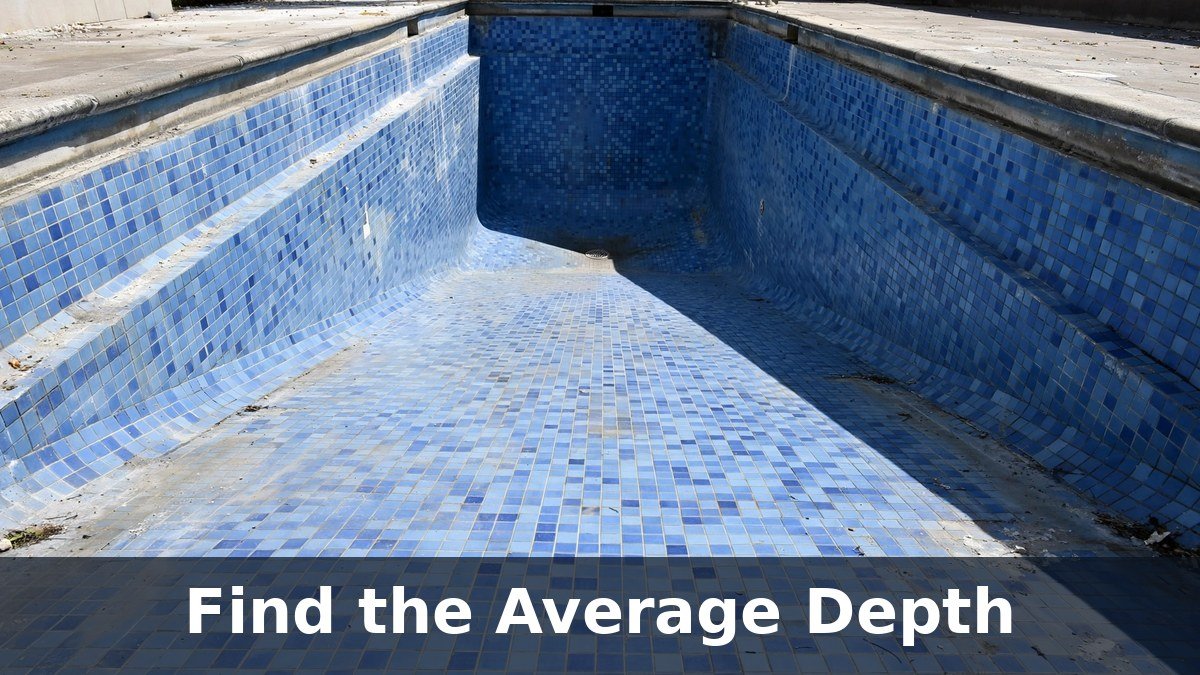
Most pools slope from a shallow end to a deep end, so a single depth reading will mislead you. The standard method is simple: measure the water depth at the shallow end, measure it at the deep end, add the two together and divide by two. A pool that is 3 feet at the shallow end and 7 feet at the deep end has an average depth of 5 feet.
Use the actual water depth, not the wall height. Also, measure in a few spots if the floor is uneven, because some pools have a gentle bowl shape rather than a straight slope. The PoolSupplies guide to calculating pool gallons stresses the same point: the deepest point on its own will inflate your gallon count and lead to overdosing.
Very shallow features hold less than the formula suggests. Tanning ledges, beach entries and wide steps are usually only a few inches deep, so a pool with a large ledge may hold several hundred gallons less than the headline figure. For routine dosing, ignore the difference. For a salt system or heater, mention the ledge to your supplier.
A Worked Example
Take a rectangular pool that is 32 feet long and 16 feet wide. The shallow end is 3 feet deep and the deep end is 7 feet deep. Here is how the pool volume calculator works through it:
- Average depth = (3 + 7) ÷ 2 = 5 feet
- Volume in cubic feet = 32 × 16 × 5 = 2,560 cubic feet
- Gallons = 2,560 × 7.48052 = 19,150 US gallons
- Liters = 19,150 × 3.78541 = 72,491 liters
So this pool holds about 19,150 gallons. Notice how the average depth does the heavy lifting. If you had used the deep end alone, you would have calculated 26,810 gallons, which is about 40 percent too much. Chemicals dosed from that wrong figure would be far stronger than intended.
Here are three more shapes through the same tool. A round pool of 24 feet across with an average depth of 4 feet holds 13,536 gallons. An oval pool of 30 by 15 feet with an average depth of 4.5 feet holds 11,897 gallons. And a kidney pool 30 feet long, with widths of 14 and 18 feet and an average depth of 4.5 feet, holds 14,542 gallons.
Common Pool Sizes and Their Volumes
The table below gathers the examples from this page in one place. Use it as a sanity check for your own result. If your pool is a similar size but your figure is far away from these, measure again before you order anything.
| Pool shape and size | Average depth | Volume (US gallons) | Volume (liters) |
|---|---|---|---|
| Rectangle, 32 × 16 ft | 5 ft | 19,150 | 72,491 |
| Round, 24 ft diameter | 4 ft | 13,536 | 51,241 |
| Oval, 30 × 15 ft | 4.5 ft | 11,897 | 45,036 |
| Kidney, 30 ft long, 14 and 18 ft wide | 4.5 ft | 14,542 | 55,048 |
Depths are averages of the shallow and deep ends, as explained above. If you are also planning the area around the pool, our sand calculator helps with the sand base under an above-ground pool, and the tile calculator covers pool surround tiling.

Common Mistakes When Measuring a Pool
The first mistake is measuring the wall instead of the water. Volume belongs to the water, so measure the water surface and the water depth. The second mistake is using the deep end depth on its own, which overstates volume and leads to strong chemical doses. The third is forgetting that above-ground pools are often sold by their frame size, while the water inside is a little smaller in every direction.
Rounding causes quieter errors. A length of 31 feet 6 inches should go into the pool volume calculator as 31.5, not 31 or 32. Small roundings in length, width and depth multiply together, so half a foot here and there can shift the answer by hundreds of gallons. Finally, remember that steps, benches and swim-outs displace water. The formula treats the pool as a clean shape, so a pool with large built-in steps will hold a little less than the result shown.
FAQs
How many gallons are in a 16 × 32 pool?
It depends on the depth. A 16 × 32 foot pool with a shallow end of 3 feet and a deep end of 7 feet averages 5 feet deep, and holds 19,150 gallons. A shallower version averaging 4 feet holds about 15,320 gallons. Enter your own depths into the pool volume calculator for an exact figure.
How do I calculate the average depth of my pool?
Add the shallow end water depth to the deep end water depth, then divide by two. For example, 3 feet plus 7 feet divided by two gives an average depth of 5 feet. Use the water depth, not the wall height.
How many gallons is a 24 foot round above-ground pool?
A 24 foot round pool with 4 feet of water holds about 13,536 gallons. Many above-ground pools are filled to around 4 feet even when the wall is taller, so check your actual water depth before ordering chemicals or a salt system.
Is the 7.5 multiplier accurate enough?
The 7.5 shortcut overstates volume by about a quarter of one percent, because the true figure is 7.48052 gallons per cubic foot. That is fine for a quick estimate. For chemical dosing and equipment sizing, the exact number from this pool volume calculator is the safer choice.
Why does my pool shop’s figure differ from the calculator?
Shops often use the builder’s nominal volume, which may assume a simple shape and standard depths. Built-in steps, benches and beach entries reduce the real volume, while a deeper-than-standard deep end raises it. Measure your own pool and trust the measurements over the brochure.
How often should I recheck my pool volume?
Once is enough for most owners, because the pool shell does not change. Recheck if you have the pool resurfaced with a different depth profile, add a large tanning ledge, or discover that your original measurements came from the deck rather than the waterline.
For more updates visit: CALCIQ



Comments 1