

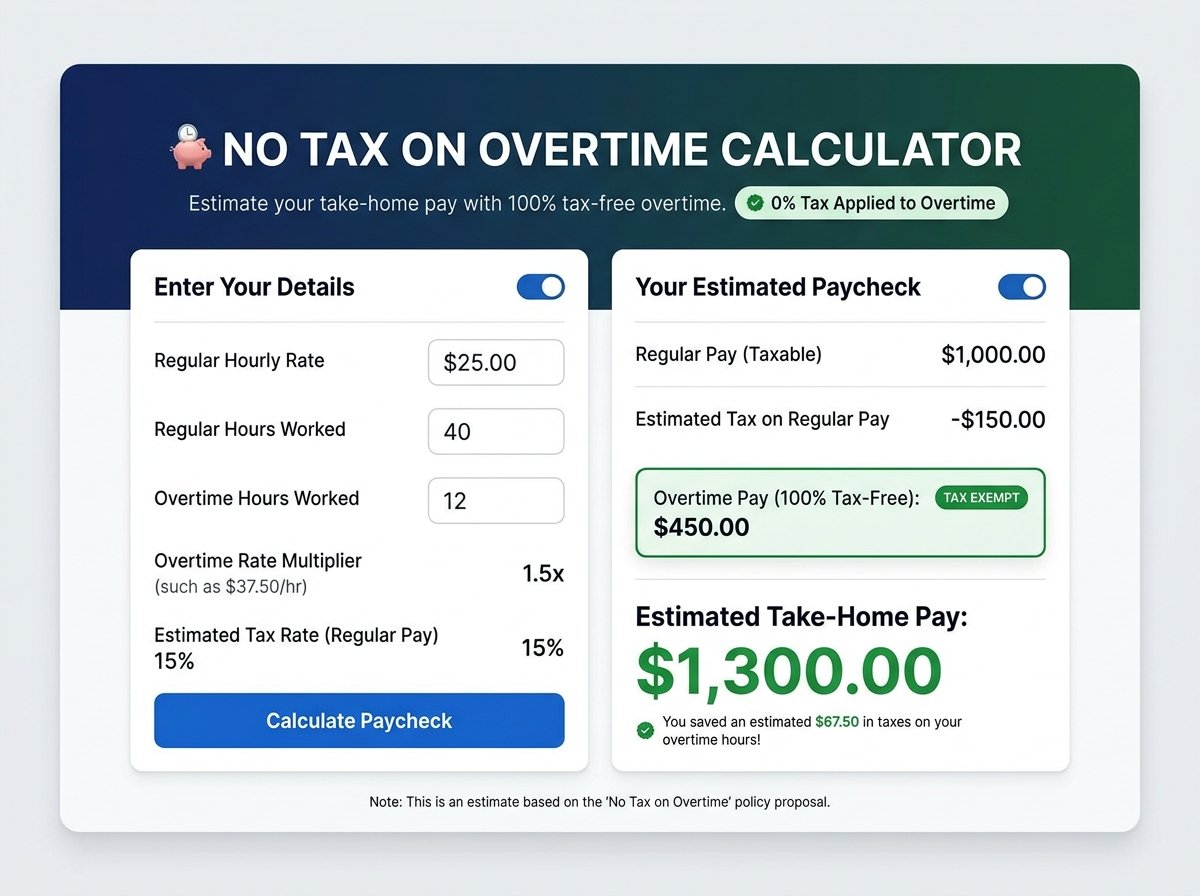
A no tax on overtime calculator helps you estimate how much extra pay you could keep. However, overtime is generally taxable in the United Kingdom. Most workers must pay Income Tax and, where applicable, National Insurance on their overtime earnings. Your take-home pay depends on your salary, tax code, tax band and other deductions. A calculator can help you estimate these costs before you agree to extra shifts.
The phrase “no tax on overtime” can also refer to US tax policy. This matters because US tax rules differ from UK rules. This guide explains how overtime tax works in the UK, how to estimate your extra pay and what to check before trusting a calculator.
What Is a No Tax on Overtime Calculator?
A no tax on overtime calculator estimates the effect of extra working hours on your pay. It can show your gross overtime earnings and estimate your take-home amount after deductions.
The phrase “no tax” does not mean that your overtime qualifies for a tax exemption. Some people use this phrase when they search for new tax policies. Others want to know how much extra money they will receive after deductions.
For UK workers, a reliable calculator should use UK tax rules. It should also explain its assumptions. This helps you understand whether the result is a rough estimate or a detailed calculation.
Is Overtime Tax-Free in the UK?
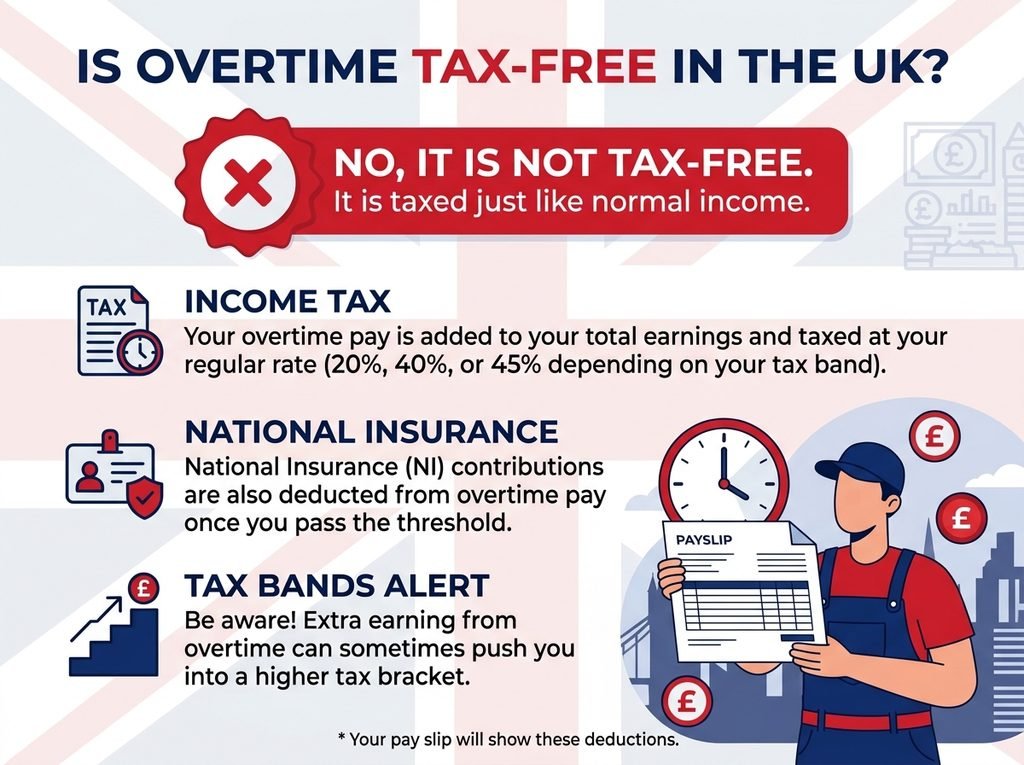
No, overtime is generally taxable income in the UK. When your employer pays you for extra hours, that money normally counts towards your employment income. Income Tax and National Insurance may apply.
Most employers use the Pay As You Earn system, also known as PAYE. Your employer uses your tax code and payroll details to calculate deductions. Your pay frequency and total earnings can also affect the result.
A payslip may sometimes show little or no tax on an overtime payment. However, that does not prove the payment is tax-free. Your tax code or payroll adjustments may explain the difference.
Be careful with any calculator that promises tax-free overtime for every UK worker. Check which country’s rules it uses and whether a specific exemption applies to your situation.
How Does a No Tax on Overtime Calculator Work?
A calculator estimates your extra earnings using your normal pay and overtime details. Some tools also estimate Income Tax, National Insurance and other deductions.
Enter Your Normal Pay
Start by entering your regular salary or hourly rate. If you earn an hourly wage, include your normal working hours when the calculator asks for them. If you receive a salary, enter the annual or monthly amount requested.
Your normal earnings matter because overtime increases your total income. A worker near a tax threshold may see a different result from someone who earns much less.
Add Your Overtime Hours and Rate
Next, enter the extra hours you expect to work. Add the overtime rate your employer pays. Some employers pay the normal hourly rate, while others offer higher rates for weekends or public holidays.
For example, imagine that you earn £15 an hour. You work five extra hours at the same rate. Your gross overtime pay would be £75 before deductions.
Now imagine that your employer pays time and a half. Your overtime rate would rise to £22.50 an hour. Five extra hours would then earn you £112.50 before deductions.
Check Your Estimated Take-Home Pay
A detailed calculator can estimate how much of your overtime you keep. It may ask for your tax code, pay frequency and pension contributions. Some tools also include student loan repayments.
These details can improve the estimate. However, a basic calculator may not include every part of your payroll. Your final payslip may therefore show a different amount.
How Is Overtime Tax Calculated in the UK?
The UK does not generally charge a separate tax rate just for overtime. Instead, overtime forms part of your employment income. The usual tax rules apply to your earnings.
Income Tax on Overtime
Your Income Tax depends on your taxable income and the rules for your tax year. Your Personal Allowance and tax band also affect the calculation. The rates and thresholds can differ across the UK.
Extra overtime does not mean that all your income suddenly faces a higher tax rate. The UK uses a progressive tax system. Different parts of your taxable income can fall into different tax bands.
For example, some of your earnings may fall within one band while extra income falls within another. Only the portion within the higher band generally faces that higher rate. Your Personal Allowance and other circumstances can also affect the result.
National Insurance Contributions
National Insurance is separate from Income Tax. Employees may pay National Insurance on overtime when their earnings meet the relevant conditions and thresholds.
Your pay period and contribution rules affect the amount. This means you should not estimate your take-home pay using Income Tax alone. A useful overtime calculator should consider National Insurance where it applies.
Pension and Other Deductions
Your overtime may also affect workplace pension contributions. The result depends on your pension scheme and which earnings count as pensionable pay.
Student loan repayments and other payroll deductions can reduce your final payment too. These deductions are not all taxes, but they still affect the amount that reaches your bank account.
Example: How Much Overtime Pay Could You Earn?
Suppose you earn £15 an hour and work five extra hours. At your normal rate, you would earn £75 in gross overtime pay.
If your employer pays time and a half, your rate becomes £22.50 an hour. Those five extra hours would earn you £112.50 before deductions.
Your take-home amount will depend on your wider payroll details. Income Tax, National Insurance, pension contributions and other deductions may reduce the payment.
To estimate the difference, compare your expected take-home pay with overtime against your expected pay without it. A detailed calculator can help you make this comparison. Your payslip will confirm the amount your employer actually pays.
What Does “No Tax on Overtime” Mean in the United States?
The phrase “no tax on overtime” also appears in US tax policy. US federal legislation enacted in 2025 introduced a tax deduction for qualifying overtime compensation. However, this does not make all overtime pay completely tax-free.
The rules include eligibility requirements and limits. Other payroll taxes or state-level taxes may still apply. You should not use these US rules to calculate your UK wages.
Always check the country supported by a no tax on overtime calculator. A US tool may use American tax brackets and qualifying overtime rules. These calculations will not give a reliable UK estimate unless the tool specifically supports UK payroll rules.
If you work in the UK, choose a calculator that uses the relevant UK tax year. This will help you avoid confusion and misleading results.
How to Choose an Accurate Overtime Calculator
Choose a calculator that clearly states its country and tax year. For UK workers, it should distinguish gross overtime from take-home pay. It should also explain whether it includes Income Tax and National Insurance.
A useful tool should let you enter your normal pay, overtime hours and hourly rate. More detailed tools may also account for your tax code, pension contributions and student loan repayments.
Check the calculator’s assumptions before you trust its result. A simple tool can help you plan your budget. However, it may not reproduce your exact payslip.
If your overtime varies each month, look for a calculator that considers your wider earnings. You should also compare the estimate with your payroll records. If your deductions look wrong, ask your employer’s payroll team to explain them.
Common Mistakes When Calculating Overtime Pay
One common mistake is confusing gross pay with take-home pay. Gross pay means your earnings before deductions. Net pay means the amount left after deductions.
Another mistake is assuming that every overtime payment faces one fixed tax rate. Your total earnings and the relevant tax rules affect the result. A single percentage may offer a rough estimate, but it cannot cover every situation.
You should also understand the difference between a tax deduction and a tax exemption. A deduction can reduce the income used to calculate tax. An exemption can mean certain income does not face tax under specific rules. These terms do not mean the same thing.
Finally, always check the calculator’s country and tax year. A tool designed for US workers may not suit a UK employee. Using the correct calculator will help you make better decisions about extra shifts.
Conclusion
A no tax on overtime calculator helps you estimate the value of extra working hours. However, UK workers should not assume that overtime is automatically tax-free. Overtime generally counts as employment income, and Income Tax or National Insurance may apply.
Enter your normal pay, overtime hours and rate to estimate your extra earnings. Include your tax code and other deductions if the calculator allows it. Remember that gross overtime is not the same as take-home pay. Choose a tool that supports UK tax rules, then compare its estimate with your payslip.
FAQs
Is overtime tax-free in the UK?
No, overtime generally counts as taxable employment income in the UK. Income Tax and National Insurance may apply. Your exact deductions depend on your earnings and personal circumstances.
How do I calculate overtime pay after tax?
First, multiply your overtime hours by your hourly rate. This gives you gross overtime pay. Then estimate Income Tax, National Insurance and any other deductions. A UK overtime calculator can help you estimate the amount you keep.
Does overtime push me into a higher tax bracket?
Overtime can increase your taxable income, but it does not mean all your earnings face a higher rate. Under the progressive tax system, the higher rate generally applies only to the portion within that tax band.
What information do I need for a no tax on overtime calculator?
You usually need your normal salary or hourly rate, overtime hours and overtime rate. A detailed calculator may also ask for your tax code, pay frequency, pension contributions and student loan deductions.
Is no tax on overtime available in the UK?
The UK does not have a general rule that makes all overtime tax-free. The phrase also relates to US tax policy, which has different rules. Do not apply US tax rules to your UK wages.
Why does my overtime have different tax deductions?
Your deductions may change because of your total earnings, tax code or payroll adjustments. Your pay period can also affect the calculation. If your payslip seems incorrect, ask your employer’s payroll team to explain the figures.
For more updates visit: CALCIQ